
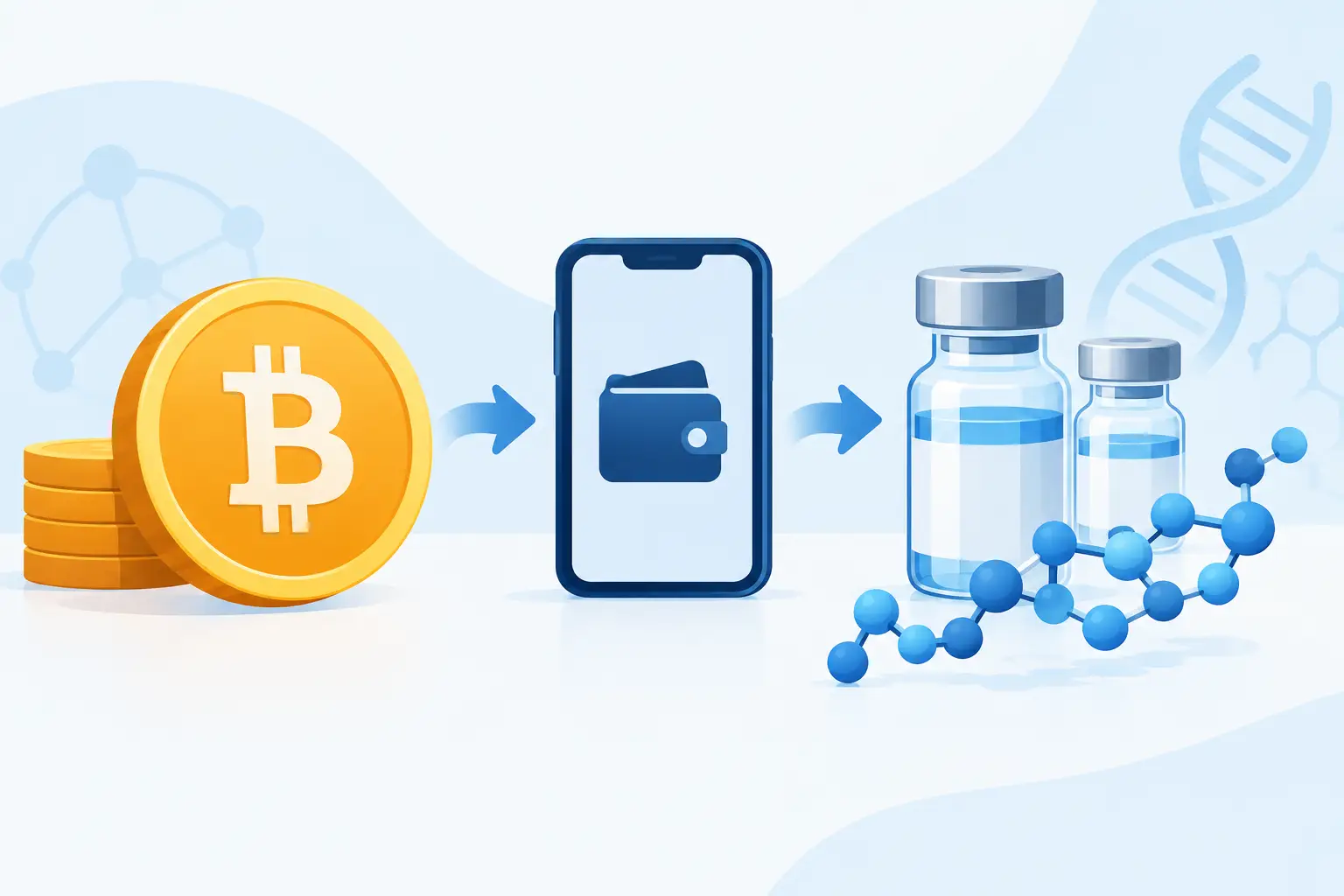
A cryptocurrency payment for peptides is not simply a different checkout button. It changes how a buyer verifies payment details, manages price movement between order placement and confirmation, and protects transaction privacy. For research-product buyers who already evaluate vial strength, batch identity, and independent certificates of analysis, crypto checkout adds another verification step that should be handled with the same discipline.
Cryptocurrency can be useful when privacy, direct settlement, and access to an alternative payment method matter. It also carries practical limits: blockchain transfers are generally irreversible, network fees can vary, and sending funds to the wrong address cannot be corrected by a bank dispute process. The right approach is straightforward - confirm the order, confirm the payment instructions, and retain the transaction record until fulfillment is complete.
Why Buyers Choose Cryptocurrency Payment for Peptides
The primary reason is transaction privacy. A blockchain transaction does not require a card number, and the payment record is handled through the selected crypto network rather than a conventional card processor. That does not mean cryptocurrency is anonymous. Public blockchains record transactions, and exchanges may apply identity-verification requirements. It does mean that the checkout method can limit the amount of card-related information involved in a purchase.
Some buyers also prefer crypto because it is available outside normal card approval patterns. A card issuer can decline a legitimate purchase based on internal fraud controls, purchase category rules, or an automated security flag. Cryptocurrency payments are authorized from the buyer's wallet, provided the buyer has sufficient funds and sends the correct asset on the correct network.
Speed can be another factor, although it depends on the network used and its current traffic. Once a transaction receives the required blockchain confirmations, the order can move into the normal preparation queue. Payment confirmation is distinct from shipping. A confirmed payment establishes that the order is paid; fulfillment still follows the seller's stated order-processing timeline.
What to Verify Before Sending Crypto
Treat the payment screen as a final order review, not a place to make last-minute decisions. Verify the selected research compound, quantity, vial concentration or product configuration, shipping address, and the final USD total before opening your wallet. If a product is tied to a specific batch, review the available batch documentation before paying rather than after the transaction has been broadcast.
The payment amount is especially important. Crypto checkout providers commonly quote a digital-asset amount based on a live exchange rate and hold that quote for a limited time. Sending less than the quoted amount may leave the payment incomplete. Sending after the quote expires can also create a mismatch if the price of the asset changes.
Before confirming the transfer, check three fields carefully: the cryptocurrency, the blockchain network, and the wallet address. Sending USDT on one network to an address intended for another, for example, may result in a delayed or unrecoverable payment. Do not assume that two assets with similar names, or two networks that support the same token, are interchangeable.
It is also prudent to account for network fees. Your wallet balance must cover both the quoted payment amount and the fee charged by the blockchain. A buyer who holds exactly the order total may be unable to complete the transfer until additional funds are added.
Crypto Checkout Is Irreversible
Card transactions can sometimes be disputed through an issuing bank. Blockchain payments work differently. Once a transaction is confirmed on the network, it cannot normally be recalled, reversed, or edited. That finality is one reason merchants can offer cryptocurrency as a payment option, but it places more responsibility on the buyer to verify details before sending.
Never use a wallet address copied from a search result, social-media post, direct message, or an old order. Use only the address generated within the active checkout session. Payment addresses can be unique to a specific order, asset, and time-limited invoice.
After sending payment, save the transaction hash, wallet receipt, and order number. The transaction hash is the blockchain identifier that allows the payment to be located if confirmation takes longer than expected. It is more useful to support teams than a screenshot alone because it shows the sending address, amount, network, and confirmation status.
Payment Privacy Still Requires Good Security
Crypto can reduce reliance on card networks, but it does not replace ordinary account security. Use a self-controlled wallet only if you understand how to protect its recovery phrase and private keys. Never share a seed phrase with a seller, support agent, or payment processor. No legitimate order confirmation requires it.
Buyers using an exchange wallet should also consider withdrawal holds and network selection rules. Some exchanges delay outgoing transfers after account changes, security resets, or newly added withdrawal addresses. Others may default to a lower-cost network that does not match the checkout invoice. Review the withdrawal page before approving the transaction.
A hardware wallet or reputable self-custody wallet can offer stronger control over authorization, but it also means the buyer is fully responsible for key management. There is no universal best option. The practical choice depends on familiarity with crypto, the intended payment network, and the buyer's ability to securely manage access credentials.
Verification Matters More Than the Payment Method
A cryptocurrency payment does not validate product quality. Payment privacy and product verification are separate questions. Buyers should assess research products through identifiable batch records, clear lot or SKU information, independent laboratory documentation, and a seller's ability to connect the product received with the documentation displayed.
For peptides, an independent certificate of analysis should be evaluated as a batch-specific record rather than a generic marketing image. Check whether the certificate identifies the compound, batch or lot reference, analytical method, and reported purity. A certificate from a named independent laboratory is more useful when it can be matched to the product's actual batch information.
This distinction is central for compounds where identity and handling expectations matter, including GLP-1 and GIP receptor agonist research products, recovery-oriented peptides, and cellular-energy compounds. A polished payment flow cannot compensate for opaque inventory or untraceable testing. Product transparency should remain the deciding standard.
NYOVY presents cryptocurrency alongside card checkout while maintaining visible USD pricing, independent COA access, and batch documentation. For a buyer, that structure makes it easier to separate the purchase decision from the payment decision: evaluate the product and its documentation first, then choose the checkout method that fits the desired level of payment privacy and operational convenience.
From Confirmation to Shipment
Once the network confirms the transaction, the order enters fulfillment according to the seller's stated process. Do not interpret an initial pending status as a failed order. Depending on the asset and blockchain, confirmations may take minutes or longer during periods of network congestion.
If payment has been sent but the order remains unpaid after a reasonable confirmation period, compare the transaction hash against the checkout invoice. Confirm that the sent amount, receiving address, and network match the invoice exactly. Contact support through the seller's official support channel and provide the order number and transaction hash. Avoid posting either publicly, particularly if the transaction can be connected to personal details.
Fulfillment expectations should be explicit before checkout. Look for stated preparation times, carrier tracking, shipping costs, and discreet packaging practices. For US buyers, clear dispatch expectations matter because payment confirmation and physical shipment are different milestones. An order may be paid and verified while still awaiting normal pick, pack, and carrier handoff.
A Practical Pre-Payment Check
Before paying with cryptocurrency, confirm the product selection and USD total; review the batch-specific COA and product identifiers; ensure the quoted crypto amount is still active; match the asset, network, and wallet address; and retain the order number and transaction hash. These checks take little time and address most avoidable payment issues.
Cryptocurrency is best viewed as a controlled checkout option, not a shortcut around due diligence. When the payment instructions are exact and the product records are transparent, buyers can use crypto with the same clear expectations they should bring to every research-compound order.